
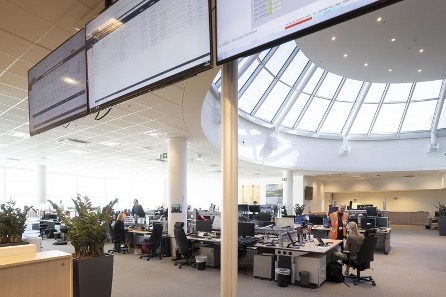
APOC implementation and evolution at Brussels Airport

APOC implementaties at Brussels Airport information hall

Objective

The objective of the project was to revolutionize operational methodologies at the airport, encompassing processes, roles, tools, and physical co-location of decision-makers from various operational stakeholders: airport departments, ground handlers, airlines, and ANSP. This collaborative initiative aimed to foster a proactive, data-driven, and efficient approach to managing the airport’s main flows: aircraft, passengers, and baggage. Beyond mere physical relocation and procedural adjustments, the project also prioritized a data-driven, transparent and collaborative culture.

The Airport Intelligence team was part of the conceptualisation, development and implementation of the APOC at Brussels Airport since the project kick-off in 2014. Our experts have lived the implementation of the APOC in 2015 and were part of the continuous improvement over the past years. Our involvement spans various domains:

  • Project management aligned with the airport’s portfolio strategy
  • Development of the ConOPS
  • Project execution, launch, and post-launch follow-up
  • Establishment of a clear governance structure, organisational structure and working method for the APOC, with clear roles and responsibilities
  • Stakeholder onboarding and alignment
  • Mapping of airport processes, review and documentation through the development of an APOC Manual
  • Continuous improvement and implementation of Business Intelligence to facilitate proactive decision-making and follow-up
  • Developing comprehensive training and communication plans, including stakeholder interviews, sensitization programs, workshops, and various communication tools
  • Providing ongoing support through a dedicated change management plan and a full-time change agent post-launch

Project Outcome

Brussels Airport became one of the first in Europe to adopt the APOC concept, taking a holistic approach known as Total Airport Management (TAM). From the start, the initiative included external stakeholders to improve the passenger experience while ensuring operational stability and predictability. The project also strengthened collaboration with external partners by integrating ground handlers, airlines, and airspace users into the airport’s operational model.

The project’s success led to further evolutions of:

  • APOC 2.0, marked by both a physical relocation and a significant shift in operational methodologies towards a more data-driven culture with the development of the Airport Operations Plan (AOP). Our experts played a crucial role in integrating data into the airport’s operational framework and managing the organizational and cultural shifts necessitated by this innovative approach to airport operations.
  • APOC 3.0, marking a further optimization of the APOC by defining a ConOPS through the integration of additional stakeholders and improved ways of working by adding new technologies, further evolving the AOP, reorganizing the lay-out to further foster collaboration and introducing more ergonomic workplaces.